
Most businesses still operate on a 9-to-5 model while their customers don't. The result isn't just inconvenience — it's a measurable revenue gap that compounds daily.
The real case for 24/7 call handling automation isn't theoretical. It shows up in concrete, trackable outcomes: calls answered during peak surges without adding staff, consistent caller experiences across every interaction, and operational costs that don't scale linearly with demand. This article covers all three advantages — along with what businesses lose when automation is missing. Businesses that want a preview of what AI handles at 2 AM can See How AI Handles After-Hours Calls before reading further.
Key Takeaways
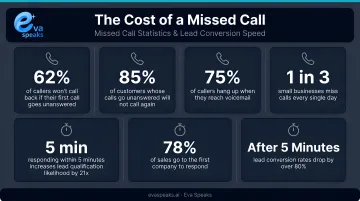
- Every unanswered call is a potential customer lost; 85% of callers don't call back after reaching no answer
- Automated call handling eliminates the need for costly overnight staffing shifts
- Consistent, script-driven call flows resolve more calls on the first try and reduce repeat contacts
- Businesses without automation accumulate missed leads, higher costs, and inconsistent customer experiences
- Maximum value comes from consistent automation paired with regular routing reviews and clear escalation paths to live agents
What Is 24/7 Call Handling Automation?
24/7 call handling automation uses AI-powered software to answer, route, and respond to inbound calls without human intervention — at any hour, on any day.
It applies wherever businesses receive inbound calls: appointment bookings, service inquiries, support requests, lead qualification. Industries like healthcare, home services, legal, and real estate see the highest impact, but the underlying need — no call going unanswered — applies broadly.
The goal isn't automation for its own sake. It's three practical outcomes:
- No missed calls — every inbound call receives an immediate response
- No cold leads — high-intent callers are captured before they move on
- No unnecessary wait — callers are routed correctly on the first contact
Achieving these outcomes requires the right infrastructure. EvaSpeaks delivers it through automated call answering, configurable call-flow scripts, routing rules, and real-time transcription, giving businesses a consistent call experience that runs without a staffed reception desk. Because EvaSpeaks operates through a subscription model, businesses get the same quality of call handling during a slow month as they do during a peak marketing campaign — without the cost variability that per-minute services introduce.
Key Advantages of 24/7 Call Handling Automation
The three advantages below map directly to outcomes businesses actually track: revenue capture, cost control, and service quality. Each one compounds over time — consistent operation produces better routing data, which improves resolution rates, which compounds further as call volume grows.
Advantage 1: Zero Missed Calls Means Zero Missed Revenue
Missed calls aren't a minor inconvenience — they're a direct revenue leak.
CallRail's 2025 analysis of 1.1 million conversations found missed-call rates of 32% in healthcare, 28% in legal, and 14% in home services. Invoca's data adds another layer: only 2% of unanswered callers leave a voicemail. That means the other 98% either hang up and move on or call a competitor.
Why this matters for revenue specifically:
- High-intent callers don't wait. An MIT/InsideSales study using 15,000+ leads found contact odds drop 100x when a lead is reached after 30 minutes rather than 5 minutes. Speed to answer is a direct proxy for lead conversion.
- Voicemail doesn't rescue demand. With only 2% of callers leaving messages, any intake strategy built around voicemail recovery is structurally flawed.
- Competitors answer. In service-based industries, timing often decides whether a customer books with you or the next result on their search.
24/7 automated call handling closes this gap — calls are answered on the first ring at 2 AM, during holidays, and during volume surges — without additional staffing.
KPIs this affects: First-answer rate, missed call rate, lead capture rate, inbound conversion rate
Highest impact for: Small teams with high inbound volume, businesses with significant after-hours demand, and any service-based business where timing determines whether a customer books. To see what AI-driven call handling looks like in a real zero-missed-call scenario, you can Watch AI Call Flow Demo.
Advantage 2: Lower Operational Costs Without Sacrificing Coverage
24/7 human staffing is expensive. The math is straightforward.
According to the U.S. Bureau of Labor Statistics, total employer compensation for private office and administrative support workers reached $35.96 per hour as of December 2025 — including $24.79 in wages and $11.17 in benefits. A single always-on seat requires 8,760 staffed hours per year. At that rate, fully loaded 24/7 human coverage costs roughly $315,000 annually — before overtime, scheduling inefficiencies, PTO backfill, and recruiting.
SHRM reported an average cost per hire of nearly $4,700 in 2022, adding recurring recruiting friction to any coverage model dependent on human receptionists.
Automated call handling changes this cost structure in three ways:
- No per-hour wages for routine call tasks — answering, routing, FAQ responses, and intake
- Instant scaling during campaigns or busy seasons — call volume can double without proportional cost increases
- Predictable software-based costs replace variable labor expenses, improving budget planning
For growing SMBs not yet ready to staff a full reception team, this cost structure makes 24/7 coverage actually achievable. Eva Speaks operates on a service model — businesses get consistent coverage without managing shifts, absorbing turnover costs, or paying overtime during peak periods.
KPIs this affects: Cost per call, operational overhead, staffing-to-coverage ratio, cost per lead captured
Highest impact for: Seasonal businesses, growing SMBs, and any business needing after-hours coverage without the overhead of a night shift. Businesses that want to understand what a cost-optimized 24/7 AI setup would look like for their specific call volume can Get a Customized Workflow Recommendation.
Here is how AI-powered, IVR-based, and live answering approaches compare for 24/7 call handling automation:
| AI Automation (EvaSpeaks) | Legacy IVR System | Live 24/7 Answering Service | |
|---|---|---|---|
| Features | Natural conversation, routing, scheduling, CRM sync, unlimited simultaneous calls | DTMF menus, fixed routing, voicemail | Human agents available 24/7 |
| Best-fit Business Size | SMB to mid-market | Large enterprise | Any size |
| Key Strengths | Zero missed calls, consistent, instant CRM update | Predictable, proven | Human empathy, complex calls |
| Implementation Complexity | Low - hours | High | Low |
| Integration Capability | CRM, scheduling, EHR native | Custom dev required | Manual or limited |
Advantage 3: Consistent, On-Brand Call Experiences at Scale
Human agents — even strong performers — introduce variability. Tone shifts. Scripts drift. Fatigue sets in during a long shift or a high-volume day. The result is an inconsistent caller experience that erodes trust over time, often without the business noticing until it shows up in churn or repeat calls.
Automated call handling solves this at the structural level. Every call follows the same flow, applies the same routing logic, and collects information the same way — regardless of time of day or call volume. Eva Speaks lets businesses define exactly how calls are handled and how callers are directed, producing a consistent branded experience from the first ring.
Why consistency drives measurable outcomes:
- First call resolution improves. Callers are routed correctly the first time, reducing transfers and repeat contacts. SQM's benchmarking data shows every 1% improvement in first call resolution correlates directly with a 1% improvement in customer satisfaction.
- Trust compounds. A professional, predictable experience on every call — including off-hours — signals that the business is reliable.
- Quality gaps close during growth. For rapidly expanding teams where training new staff creates temporary quality dips, automation maintains baseline performance.
KPIs this affects: First call resolution rate, CSAT, call deflection rate, repeat call rate
Highest impact for: Multi-location businesses needing uniform caller experiences, businesses with compliance or quality requirements, and teams growing faster than training can keep pace with.
What Happens When 24/7 Call Handling Automation Is Missing
Missing coverage doesn't announce itself with a single catastrophic failure. It shows up as a slow, steady drain on revenue, trust, and team capacity.
- Missed calls become missed leads. With 85% of unanswered callers not calling back, every gap in coverage is a gap in revenue capture.
- Voicemail doesn't recover demand. Only 2% of unanswered callers leave a message — the other 98% have already moved on.
- Inconsistent handling erodes trust. Variable call quality — depending on who answers, when, and how exhausted they are — creates uneven experiences that gradually damage the brand.
- Staffing costs become unsustainable at scale. Round-the-clock human coverage requires multiple shifts, benefits, and recruiting overhead that most SMBs can't absorb.
- Teams get stuck on low-value tasks. Without automation handling routine intake, staff spend time on repetitive call handling instead of closing deals, resolving escalations, or onboarding clients.
- Reactive hiring replaces scalable systems. As call volume grows, businesses add headcount rather than building infrastructure that scales without proportional cost increases.
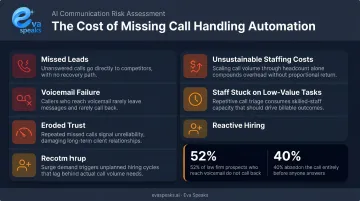
Clio's legal intake research offers a concrete example: secret shoppers could only reach 52% of law firms by phone, and only 40% answered when called directly. For a high-intent caller ready to hire, that's a first-impression failure at the worst possible moment.
How to Get the Most Value from 24/7 Call Handling Automation
Automation performs best when it's actively managed — reviewed, refined, and integrated into how your team handles calls every day.
What maximizes value:
- Apply it across all inbound scenarios — not just after hours. The more call data the system processes, the more accurate its routing and responses become.
- Review call outcomes and routing data regularly — identify misrouted calls, unresolved queries, and high drop-off moments, then refine call-flow scripts accordingly.
- Build clear escalation paths to human agents — automation handles routine, high-volume tasks best. Complex or emotionally sensitive calls should route to a person, with conversation history preserved through the handoff.
- Track the right KPIs — first-answer rate, missed call rate, booking rate, first call resolution, and cost per handled call reveal whether the system is working or where to improve.
The businesses seeing the strongest results treat automation as infrastructure — something that runs continuously, improves with data, and makes every other part of their communication strategy more effective. Eva Speaks is built to support exactly that kind of ongoing, integrated use. Businesses ready to see this applied to their own operation can Request Live Demo.
Conclusion
The value of 24/7 call handling automation is practical and measurable. Three things happen when businesses implement it consistently:
- Answered calls become retained customers instead of missed opportunities
- Consistent experiences build the kind of trust that repeat business depends on
- Staffing overhead shrinks, freeing budget for growth priorities
These advantages compound. Businesses that implement consistently and refine over time see better routing accuracy, higher resolution rates, and stronger customer relationships — because a system that answers every call and routes it correctly at any hour simply outperforms one that doesn't.
Treat automation as an ongoing operational practice, not a one-time setup. Businesses still routing calls to voicemail are ceding ground to competitors who handle every call in real time.
Frequently Asked Questions
Frequently Asked Questions
What are the benefits of 24/7 support?
Round-the-clock availability captures after-hours leads before they reach a competitor, reduces customer frustration from unanswered calls, and keeps the business accessible when it matters most — including nights and weekends when booking decisions get made.
What is a benefit of automation in BPO?
Automation reduces cost per interaction, enables consistent service delivery at volume, and frees human agents for high-complexity tasks that require judgment or empathy.
How does 24/7 call handling automation reduce operational costs?
Fully loaded human staffing costs roughly $35.96 per hour in wages and benefits according to BLS data — translating to over $300,000 annually for a single always-on seat. Automated systems handle routine call tasks without per-hour wages, sick days, or overtime, and scale instantly when call volume spikes.
Can automated call handling replace human agents entirely?
No — and it shouldn't. Automation handles routine, high-volume tasks most effectively: answering, routing, intake, and FAQ responses. Human agents remain essential for complex, emotionally sensitive, or escalated conversations. The strongest outcomes come from a hybrid model where automation and human handling complement each other.
What types of businesses benefit most from automated call handling?
Service-based businesses with high inbound call volume, significant after-hours demand, or small reception teams see the highest impact. Healthcare practices, law firms, home service contractors, and real estate offices are among the clearest use cases — industries where a missed call often means a lost client.
How do I know if my business is ready for call handling automation?
Clear signals include missed calls during peak or off-hours, inconsistent customer experiences depending on who answers, high cost of staffing receptionists relative to call volume, or a growing gap between inbound demand and team capacity. If any apply, the cost of inaction is already showing up in missed revenue and frustrated callers.